ADHD is a congenital highly hereditary neurological condition that affects roughly 1 in 10 humans. ADHD is an umbrella term to refer to conditions in humans where the dendritic side of the synapse’s dopamine receptor are under stimulated by dopamine. This article focuses on ADHD Neurology and understanding the two dominant ADHD neurological forms. Neurology is very complex, so this is going to be necessarily simplified. Even so, to get a full picture around this will take some time.
To get a better picture about what ADHD is, please take a look at Understanding ADHD Essentials.
The following is some targeted information and a summary of many other pages.
You may also be interested in
In Brief: ADHD Neurology
- The most common mechanism behind long term feelings of anxiousness (24+ months) is related to the adrenal system:
- The adrenal system includes Adrenaline and Noradrenaline. The brain has a separate although influenced version of the adrenal system to the rest of the body.
- These hormones (or neurotransmitters when in the brain) should be in the Goldilocks Zone (not too high, not too low), and the body works to keep it homeostatic. When the body has the wrong homeostasis, or for another reason can’t reach that, our feelings misreport the world, which can affect our behaviours and reasoning.
- Many ADHDers (~60%) have too much Noradrenaline, leading to long term anxiety, social anxiety, and may include self harm and suicidal.
- Some ADHDers have too little Noradrenaline (~15%).
- Some ADHDers have the body adrenal system hyper sensitive (over reacts to stimuli) and a slowed return to baseline (should be 5 to 15 minutes instead of 30+ minutes to days).
- ADHD Medications
- How they work to improve Dopamine and Noradrenaline.
- What other medications can help.
- ADHDers are often misdiagnosed with Bipolar, Borderline Personality compromising effective treatment.
- PMDD is a common complication.
- Why SSRIs are generally ineffective to poorly effective for ADHD and ASD (Autism):
- Unless you are compatible with Sertraline or Fluoxetine.
- Why SNRI and NRI medication (Tier 3 and 2) is often helpful (for too little Noradrenaline).
- Why some people need Noradrenaline modulators (effectively the opposite of NRI).
- Why people get clumsy at the end of their Tier 1 medication:
- Why you may experience general gross movement problems (Dyspraxia, Restless Leg Syndrome).

Understanding Neurotypical Neurology
We are first going to look at an ideal brain, aka one that is Neurotypical and un-traumatised. This helps us know and understand what is “supposed” to happen, and what you might experience when that doesn’t work.
In Brief:
- The PFC is what you think of as “me” when you are actively making decisions and having deep thoughts.
- Uses Dopamine.
- Most of the Executive Function is here, so if your PFC isn’t working, it’s hard to have “good executive function”.
- The Amygdala is the part of your brain that decides if you are “safe” and “not safe”, and depending on what it decides, has a very strong influence on what you think is a priority.
- Uses Noradrenaline.
- Only informs the rest of the brain about its results through feelings.
- Mood disorders often have adrenal causes.
- Thinking and skills are linked neurons trying to communicate with each other.
- Synapses use neurotransmitters to connect the path, like an on switch.
- After the signal passes through, the synapse is flushed, to reset it, like an off switch.
The Prefrontal Cortex
Click to see details:
In Brief:
- The Prefrontal Cortex (PFC) does most of your higher order thinking.
- Understanding, analysing, problem solving, creativity etc.
- Some people refer to this as the Executive Function (EF).
- EF is poorly defined, so the research is all over the place.
- Neuronal Dopamine is made at the base of the middle of your brain.
- It is carried around your in 3 major pathwasys
- 2 go to your PFC (Prefrontal Cortex), 1 to your Cerebellum (sensory system).
- The PFC is very Dopamine hungry.
In an ideal brain, let us first examine the PreFrontal Cortex (PFC).
At the front of our brain, just behind your forehead, is your PreFrontal Cortex (PFC). The PFC is what makes humans able to do the amazing thinking stuff that we do compared to other animals. This houses the majority of our cognition – Cognitive Function (aka knowing and solving), and our Executive Function (manually thinking and manually taking actions rather than relying on autopilot).
The majority of the processes described by EF are held in the PFC. This is the seat of our higher order thinking – analysing what is going on, predicting the future, making creative changes to our plans and executing them.
Dopamine is the primary neurotransmitter involved. An analogy here is to think of it as the fuel that your PFC burns to work. If you are low on Dopamine, or your PFC isn’t being used effectively, so your cognitive engine will be underpowered.
At the base of your middle brain (draw a line between your earlobes, find the middle, roughly there) are four glands that convert the ingredients in your blood into Dopamine. Three major Dopamine routes leave the glands. Two pathways go to the front and back of the PFC. One pathway that goes to your Cerebellum (which manages autonomous muscles like heart beating and breathing, muscle movements and attention).
The take away for this section is that the PFC is Dopamine hungry, needing two Dopamine pathways to feed it.
See more about the Dopaminergic System:
- Foods to eat to make Dopamine
- More in depth information about where the Dopamine is made, where it goes, and why the adrenaline glands (above the kidneys) don’t make these neurotransmitter hormones for the brain.
Everyone talks about Executive Function (EF), but almost every research article on EF defines EF differently. Generally, in science, that tells us that there isn’t a good definition for the term, which leads to many contradictions in studying the concept. Unfortunately, many papers and practitioners think they do know what it means, but they are cross talking each other. In science, when you don’t find a good and consistent definition of a thing, that means they don’t really understand it – which isn’t a good sign.
The Amygdala, ‘Safe’ or ‘Not Safe’
Click to see details:
In Brief:
- The Amygdala:
- Middle of your brain.
- Mostly uses Noradrenaline.
- Detects “safe” and “not safe”.
- Doesn’t report why, just feelings to the PFC, whose job it is to do something with those feelings.
- Not safe:
- Fear, Anger, Disgust, Unease.
- Safe:
- Happy, Content, Relaxed, Social, Creative.
- Not safe:
In the middle of our brain is a section called the Amygdala. If you connect a line between the top front of your ears and find the middle, that’s roughly where the Amygdala is. The Amygdala mostly uses the neurotransmitter Noradrenaline to work properly. Its job is to note what we are sensing (sight, sound, smell etc from your cerebellum [just above your spine]) and do a pattern match for “unsafe” with your thalamus and hypothalamus (just next to the Amygdala). If what we sense doesn’t matches to “unsafe”, our Amygdala reports “safe” in the form of the feelings “happy” or “content”. If “safe”, we then look to see if we have any opportunities available to us, such as relaxing, healing, planning, socialising and creating.
If what we sense does not match “safe”, our Amygdala reports the feeling “fear”, “anger”, “disgust” or “dysphoric” (uneasy).
If the pattern matches ‘about to hurt’:
- Viable default emergency action options:
- Freeze
- Faun
- Flight
- Fight
If the pattern matches ‘this will cause a problem later’ or ‘wrong and needs to be fixed’:
- Feels like:
- sense of justice
- there’s a right way that things should happen
- Anger escalation series:
- Passive
- Passive Aggressive
- Assertive
- Aggression
- Run
DISGUST
If the pattern matches ‘sickening’:
- EG:
- food that has gone off
- faeces
- someone does a disgusting behaviour
- Default action
- Evade the cause
- Push back the cause
- Destroy the cause (this is the source for most phobic ideals)
The Amygdala doesn’t inform our conscious mind (mostly in the PFC) why it thinks something is wrong, it just reports the feelings of fear, anger, disgust or dysphoric. Our PFC will look for what would trigger that feeling, and if identified, do something about it, either a rehearsed or primed plan, and in the absence of that, the major for F’s of the Survival Brain’s Survival Mode (Freeze, Fawn, Flight, Fight). If the PFC can’t locate the source of the problem, it keeps you alert and ready, just in case. On a false alarm, this should last between 5 to 15 minutes before returning to relaxed.
The Synaptic Gap
Click to see details:
In Brief:
- Our brain is full of connections between neurons called pathways.
- A single path is made of a sending neuron, it’s branch called the Axon, a gap called the Synapse, a receiving branch called the Dendrite and then the destination neuron. The signal is ionic instead of electrons, that is organic electricity instead of electronic electricity.
- A neurotransmitter fills the Synaptic gap between the Axon and the Dendrite, acting as an on switch when present, and an off switch when absent. That neurotransmitter can be flushed, reused or transformed.
You have heard the idea that when you learn a skill, your brain creates or grows a new pathway. Simplistically, that ‘pathway’ is a hundreds to thousands of pathways / connection between two or more neurons.
Mechanism View: Zooming in on a single connection between two neurons, one neuron sends a signal, the other receives it. The sending neuron has a tendril branch (Axon) that goes to that destination / receiving neuron’s receiving branch (Dendrite). Where the Axon meets the Dendrite is a small gap called a Synapse (Synaptic Gap / Cleft). A neurotransmitter gets stored in a tiny chamber at the end of the Axon at the Synaptic Gap.
The source Neuron sends a signal down the Axon via a cascade of ionic salts. As this gets to the Synaptic gap, a charge builds up, and when high enough in charge, triggers the release of the neurotransmitter at the Axon tip into the gap. The neurotransmitter flows across the gap and seats into the receiving dendritic receptor (of that neurotransmitter type), activating that receptor. There are a number of receptor types for each neurotransmitter. Once enough of the dendritic receptors are occupied and activated, the ionic salt signal continues through the dendrite to the receiving neuron, which then makes simple (yet sophisticated) decisions, which may trigger sending its own signals to other neurons.
Once the signals has passed from the Axon to the Dendrite, the synaptic gap is flushed, resetting it. Some of the neurotransmitter is recycled (re-uptaken) to be used again, some is turned into another neurotransmitter (dopamine to noradrenaline, noradrenaline to adrenaline), and some is discarded (eventually it becomes urine).
Ionic Salts:
- Sodium
- Chlorine
- Calcium
- Potassium.
A more detailed explanation: Neurology.
Neurotransmitters
What is a neurotransmitter? A Neurotransmitter is a chemical, often made from hormones, that fills the Synaptic Gap, allowing the signal to bridge the gap from a source Neuron’s Axon to a destination Neuron’ Dendrite. You can think of it as an on switch when present, and an off switch when absent.
Each neurotransmitter has different use cases, and specialises for certain types of communications for different networks of neurons. A network of neurons, that is a cluster, creates an ability, such as turning sound into speech, and another cluster to turn speech into concepts.
Our body tries to keep the levels of these neurotransmitter in the Goldilocks Zone via homeostatic. That is, not too little, not too much. However, the body may have impediments to reaching these levels due to inadequate diet providing source materials, some biological blockage, or for some reason the homeostatic point is outside of the Goldilocks Zone of “good”.
For ADHDers, the most important Neurotransmitter is Dopamine, a part of the Dopaminergic System [full page]. See the link below for the ADHD important details.
A more detailed explanation: Neurotransmitters.
Click to expand [List of MH Neurotransmitters].
The Neurotransmitters most linked to Mental Health.
- Dopaminergic Family:
- Dopamine,
- Prefrontal, deep thinking, understanding, solving, ‘conscious deliberate thought’, retaining temporary information (working memory / working space).
- Cerebellum, smoothing muscular movement, sentence words, managing vocal tone and pacing, manging autonomous system.
- Noradrenaline ,
- Amygdala, identifying threat or safety thus most of mood; prioritisation and impulse control.
- Adrenaline,
- Cerebellum, freeze, fawn, fight, flight reflex; task activation aka energy to do things.
- Dopamine,
- Serotonergic Family:
- Serotonin
- Melatonin
- Endorphins:
- Named after morphine
- lit endogenous (existing within / native to) morphine’s (as there are multiple types)
- Oxytocin
- Endocannabinoids :
- Named after cannabis
- lit. endogenous cannabis forms
- ‘oid’ means form in ancient greek
- Neonicotinoids
- Named after nicotine
- lit. new nicotine forms
- Acetylcholine
- Mostly muscle regulation and the parasympathetic system
- Aka calming down
- Mostly muscle regulation and the parasympathetic system
- GABA
- Gamma-aminobutyric acid, γ-aminobutyric acid
- Calming neuron excitement
- “shhh…. don’t look over there, everything is fine”
- and far more that aren’t currently considered to be strongly connected to how we think, feel and behaviour (aka Mental Health)
We cover these in more detail in the Neurotransmitter Page.
The Dopaminergic Family
The Dopaminergic Family is Dopamine, Noradrenaline and Adrenaline.
While most of the dopamine you make is from your adrenal glands (just above your kidneys, near your stomach), that Dopamine can’t be used by your brain as it can’t pass the Blood Brain Barrier. Nor can the secondary and tertiary hormone / neurotransmitters Noradrenaline and Adrenaline.
Dopamine is used for a number of brain functions. For ADHD, the most important are the so called Executive Function of deliberate action, understanding, solving and creativity.
Some of the unused Dopamine is converted into Noradrenaline. Noradrenaline also used for a number of brain functions. For ADHDers, the most important is the threat detection system in the Amygdala, which generates our emotional feelings and allows us to prioritise (see the section above Amygdala for more details). If the Amygdala can’t operate correctly due to too little Noradrenaline (around 60% of ADHDers) or too much Noradrenaline (around 10% of ADHDers), then it can’t trust a feeling of “no threat” aka “safe”. Instead, the Amygdala reports “unsafe”, which may feel like fear, anger, disgust or dysphoria (unease).
If we are not safe, the cause of that threat is a priority to mange. If it is a false report, that can be very distracting. So long as we have good cognitive function (sufficient Dopamine in the prefrontal cortex), you may be able to override mild to moderate strength erroneous feelings impulse actions. If your cognitive function is impaired by an insufficiency of Dopamine in your prefrontal cortex, then you likely can’t hold back the mild and moderate impulsive actions to become safe.
Some of the unused Noradrenaline is converted into Adrenaline. This is primarily used to activate actions, whether mental or physical. When Adrenaline runs low, we stop those actions and rest to recover. Reserve Adrenaline can also be used by the brains Survival Mode to take over and keep you alive.
I’m not going to cover the other neurotransmitters here as that is beyond the scope of this article. We have covered that in our Neurotransmitter page.
ADHD Neurology
I have described the important factors of how the ideal healthy neurotypical brain works so that we can compare how the ADHD brain struggles.
In Brief:
- ADHD is an umbrella term for many conditions that struggle around insufficiency of Dopamine in the synaptic gap.
- The majority of ADHD fits into 2 Major Types
- 1 – Insufficient Dopamine is generated in the brain
- 2 – Too much Dopamine is converted to Noradrenaline
- Understanding that Noradrenaline being out of the Goldilocks Zone explains most ADHD anxiety, aggression and impulse control problems
- Many conditions may be diagnosed due to this.
ADHD, The 2 Major Types, 2 subtypes
Reminder:
ADHD is an umbrella term for a range of biological causes that result in an insufficiency of Dopamine triggering the dendritic Dopamine receptors to pass the signal from the source neuron to the destination neuron. Let me break that down a bit. The source neuron sends a signal down the axon (branch from the source neuron) to the destination neuron via its receiving branch, the dendrite. Between the end of the axon and the dendrite is a gap, called the synaptic gap. To pass the signal across this gap, dopamine is released (the key neurotransmitter for the prefrontal cortex). The Dopamine flows across the gap and momentarily lodges into the dopamine receptors. When enough dopamine receptors are filled, the dendrite perceives this as a valid signal and continues the signal from the source neuron to the destination neuron. Effectively, this “gap” is a switch that has just been turned “on”. If insufficient Dopamine is released, or something is blocking the receptors, or the dendrite doesn’t perceive “sufficient activation”, the switch remains “off”.
Once the signal has been passed on, the synaptic gap is flushed, resetting the switch to “off”.
Most of ADHD diagnosis and treatment focuses on Dopamine only. Personally, I think this is an error, but I didn’t define this field of medical treatment.
There 2 most common causes for the prefrontal Dopamine Synapse switch failing to turn on:
- Dopamine glands aren’t making enough Dopamine.
- If you run out of Dopamine, you can’t turn the switches on.
- Dopamine is being used inefficiently.
- Too much Dopamine is being converted to Noradrenaline, leaving insufficient Dopamine to active the switch.
- Too much Dopamine is being flushed per activation of the synaptic switch.
- Too many Dopamine receptors need to be activated, making it hard to get a good timely signal, or over using Dopamine, emptying the “Dopamine Tank” faster than Dopamine can be generated.
As noted earlier, from Dopamine, we make Noradrenaline. Recall that your Amygdala uses Noradrenaline to detect your threat level, and communicates this to your conscious brain an emotionally feeling, primarily based on your perceived circumstances. Your Amygdala prompts you to make and keep priorities. From Noradrenaline, you make Adrenaline, which allows you to take action. If you run low on Adrenaline, you will probably become anxious or aggressive to try to drive the Adrenaline up. If you run out, you are Depressed.
Insufficient Production of Dopamine
Logically, if you don’t make enough Dopamine, you probably don’t make enough Noradrenaline (about 60% of ADHDers). If your brain flushes too much Dopamine after using it, then unused Dopamine isn’t being converted to Noradrenaline (problems in “uptake”). Regardless of which path, this person will feel Anxious and Depressed, often with Suicide and Self Harm.
Inefficient Use of Dopamine
The other variant is that your Dopamine is being converted too quickly to Noradrenaline, robbing your PFC of needed Dopamine and driving your Noradrenaline too high, flooding the Amygdala and interfering with threat detection. This leads a person to always be on the edge of their seat, ready for something bad (fight/flight), can lead to paranoia and psychosis, and at some point, exhaustion because there is nothing left – too little Dopamine, Noradrenaline and Adrenaline to function.
Understanding the Noradrenaline Anxiety Link
Remember that the Amygdala runs mostly on Noradrenaline. When it has the right amount of Noradrenaline (in the Goldilocks Zone), it can tell you when you are and are not safe (‘safe’ and ‘not safe’). When it has the wrong amount (too little or too much), your Amygdala can’t confirm you are safe, so it constantly tells you that you are ‘not safe’ via the feelings of ‘fear’, ‘anger’, ‘disgust’ and ‘dysphoria’ (unease).
When we feel safe, we feel comfort, relaxed, content, creative and so on.
Low Noradrenaline, how it feels
As your Noradrenaline falls below the Goldilocks Zone, you will first feel mild to moderate anxiety. Without sufficient Noradrenaline, your Amygdala knows it can’t rely on its assessment of ‘safe’, so it reports ‘dysphoria’, letting your Prefrontal Cortex know that is needs to do a manual check for safety.
After a while, this feels like ongoing Anxiety rather than temporary anxiousness.
If your Noradrenaline falls lower, you will likely feel constant Anxiety, Aggression and or Agitation for no good reason (not due to an objectively external concern that matches how you subjectively feel). Remember, your Amygdala’s job is to peak at your sensory data (vision, sound etc) and determine if that is ‘safe’ or ‘not safe’ and if ‘not safe’, report that as ‘fear’, ‘anger’, ‘disgust’ or if uncertain why, ‘dysphoria’. The strength and type of feeling should match what you have perceived.
These feelings and subsequent behaviours on these feelings can be easily mistaken for a General Anxiety Disorder, Anger Management Problem, Borderline Personality Disorder or some other general mood dysregulation.
The most expensive task we humans have is dealing with other humans. When we are fatigued due to low neurotransmitters and or poor sleep, or we are trying to work out what the unseen threat is, we will often attribute that feeling of anxiety to people. This can often be mistaken for Social Anxiety or Borderline Personality Disorder, and is very common in people diagnosed with Autism. You are likely to feel very Rejection Sensitive and might use People Pleasing to avoid conflict. It is common to struggle with a Strong Sense Justice, Regret and Guilt.
At lower levels, you can start catastrophising, feeling doom and starting to look for ‘ultimate solutions’ to escape this. That can look like Suicidal and Self Harm, which may also be impulsive without the prior warning of doom and gloom.
At lower levels, you will either be stuck in bed, which looks like Depression and Burnout.
High Noradrenaline, how it feels
High Noradrenaline (above the Goldilocks Zone) also feels like anxiety and aggression.
You may also feel grandiosity, over-energetic, manic and or paranoid, especially if the oestradiol is too high and you have the genetic disposition to this (look at your family tree). Very high levels look like paranoid psychosis.
You are making connections to things that you would normally dismiss, but they seem really legit. The high Noradrenaline and lowered Dopamine have impaired your reality checker, where you discard options and thoughts that aren’t likely. You feel super alert, super aware and this version of the world seems super real (psychosis and mania).
Commonly Comorbid or Mistaken Conditions
Bipolar
Bipolar is a cyclic mood disorder. Theoretically speaking, BPAD should affect ‘males’ and ‘females’ the same. However, 80% of people diagnosed with Bipolar have active ovaries. That suggests to me that Bipolar, as defined, is either often misdiagnosed, or incorrectly defined.
Mania can be caused by high levels of Noradrenaline in some neurotypes. If you are prone to mania, and you are likely diagnosed with bipolar, if you haven’t tried Beta Blockers and or Clonidine, ask your doctor to trial. You will need to be mindful of your mood levels, and as you begin to elevate, begin taking the PRN (as needed script) medication (the Beta Blocker / Clonidine) as directed. If you find that your ‘mania’ recedes to manageable levels, you may not have classic Bipolar.
Some people diagnosed with Bipolar may have PMDD instead.
PMDD
Premenstrual Dysphoric Disorder (PMDD) is a condition that can affect people with active ovaries. Oestradiol is key to regulating the Dopaminergic System. Premenstrually, Oestradiol is at its lowest, so the Dopamine and Noradrenaline production is low. Preovulation, the Oestradiol is high, so the Dopamine and Noradrenaline is high.
ADHD is supposed to be 5 to 10% prevalent in the general population. In a group of 270 people diagnosed with PMDD, 68% of them were taking ADHD medication, indicating that PMDD is strongly connected to ADHD. This makes sense. If you normally struggle to make enough Dopamine and regulate the Goldilocks Zone of Noradrenaline, then normal Oestradiol fluctuations may push the production into strongly insufficient or occasionally overabundant levels.
Low Dopamine and Noradrenaline can erroneously trigger Survival Mode. Our behaviours can break free of our conscious control when we are in Survival Mode.
Overabundant Noradrenaline may trigger mania and psychosis.
Borderline Personality Disorder, BPD, cPTSD & EUPD
Borderline Personality Disorder is also called cPTSD and EUPD.
In my professional opinion, Borderline Personality Disorder is a description of what dysregulated, unmedicated Autistic ADHDers look like for people not trained to understand Autism and ADHD.
It can be a very informative description, but it is pretty much always a misdiagnosis. (BPD can also be misdiagnosed Bipolar).
Unfortunately, the majority of diagnosticians for psychiatric conditions are GPs (medical general practitioners), psychiatrists and clinical psychologists. At the time of this writing, learning about Autism and ADHD is not part of their degree, and often not part of their Continual Professional Development. Thus, the people who are likely to try to diagnose you will not recognise the signs of Autism and ADHD if you do not show the most common classic traits, especially if female presenting.
Observed or reported traits that most frequently lead to BPD diagnosis:
- Anxiety that doesn’t respond to regular treatment
- Survival Mode with very little cognition:
- Difficulty with making and maintaining friends
- Identity confusion
- “I don’t know who I am when I’m alone” aka masking too much.
Autism
Autism is a congenital highly hereditary neurological condition that affects roughly 1 in 20-30 humans (depending on the study). It is where your neurology differs enough to the neurotypical that you have difficulty communicating and socialising with many neurotypical people.
You may have some odd movement actions (stimming, tics), which often are well treated by Dopamine medications.
You may have a preference for patterns, which can lead to a strong sense of justice and be easily thrown by changes in routine.
You may have high reactivity to certain sensory stimulation, also often helped by Dopamine medication or by Beta Blockers.
In my professional opinion, ADHD is a common variant of Autism. I have yet to meet an ADHDer that wasn’t Autistic. Currently the common response from the medical community is to say “the trait difference is subtle and so it is easy to mistake ADHD traits for Autism”. Or perhaps they are the same thing? Check out the link to learn more about why I have this opinion.
Prior to DSM V, 2013, it was not supposed to be possible to be diagnosed with both Autism and ADHD. After 2013, it became possible to do. Since then, the ‘official’ comorbidity (co-occurring) of Autism and ADHD keep increasing, from a very conservative 35% to as high as over 90%, depending on the source and bias. Either way, they are highly comorbid.
Movement Disorders
The Cerebellum (just above your spine) is the part of your brain that smooths physical and cognitive movements. The Cerebellum uses Dopamine to regulate your movement.
If you have the ADHD version where you struggle to make enough Dopamine for your PFC, then you probable also struggle to make enough for the rest of your brain. This can lead to various diagnoses of movement disorder.
For more information on the following, take a look at the Dopaminergic System page.
- Dyspraxia / Developmental Coordination Disorder
- Restless Leg Syndrome
- Parkinson’s Disease
- Tics
Medication
As covered above, ADHD is primarily about Dopamine insufficiency at the dendritic Dopamine receptors. We cover this entire topic in more detail in What ADHD Medications work?
Biological Problems Need Biological Solutions
The last D in ADHD is “Disorder”. To have a disorder means that the condition has a significant impact on you. If you don’t need medication, do you actually have this disorder?
With some medical conditions, failure to take medication can lead to immediate dire consequences, including death. Doctors recommend that you don’t cease medication without careful professional support.
If you are taking ADHD medication, you may not get quite as fast a dire consequence, but you will get immediate problems with cognition, emotion and functionality. The death rate for ADHD is hard to quantify, but it is approximately 20%. Most of this statistic is due to suicide, some is due to mishap due to lapses in concentration or adrenaline chasing.
Beyond the immediate cognition, emotion and functional deficits, and short of death, the consequences to not taking medication is quality of life.
There is a difference between existing and living, and that difference is quality.
A major component of quality is happiness and feeling at peace.
Most ADHDers self-medicate prior to diagnosis and accessing proper ADHD Medications. This can be:
- Illicit drugs: specific drugs that are illegal without a script, or just illegal regardless of a script.
- Licit drugs: caffeine, nicotine, alcohol and cannabis (depending on the laws in your region).
- Substances: sugar, fat.
- Behaviours: workaholic, adrenaline seeking / risk taking, crisis seeking, non-drug addictions (pornography / sex, gaming, gambling).
See also Understanding Addiction.
If you are an ADHDer and self-medicating, then how about you try the proper medications instead?
* This can be complicated by conflicting regulations which may require you to ‘get clean’ before you can be prescribed useful medication.
There are ways around this:
- Some psychiatrists can prescribe ADHD medications while you are using and reducing other substances.
- GP’s and psychiatrists can prescribe other dopamine affecting medications for non ADHD reasons, such as PTSD, substance use disorder and mood regulation.
- Note that ‘Rehab’ generally doesn’t work and is in direct opposition to what research tells us is best. Unfortunately it is popular.
Stimulant Medication
The most common two medication categories to address this are classified as stimulant medications, defined by having a primary ‘increasing’ effect on neuronal dopamine at the prefrontal dendritic dopamine receptor, specifically for ADHD. These are sometimes called ‘Tier 1 Medications‘, however, the Tier system isn’t generally used in any official way. The stimulant medication is to compensate for the different ways (we covered above) for why you might have a Dopamine insufficiency.
- Methylphenidate:
- Eg: Ritalin, Concerta
- Amphetamine:
- Dextroamphetamine,
- Lis-dexamphetamine
- Adderall (not in Australia)
- Methamphetamine (not in Australia for ADHD)
What do these medications actually do to improve the common cause for the umbrella term ADHD?
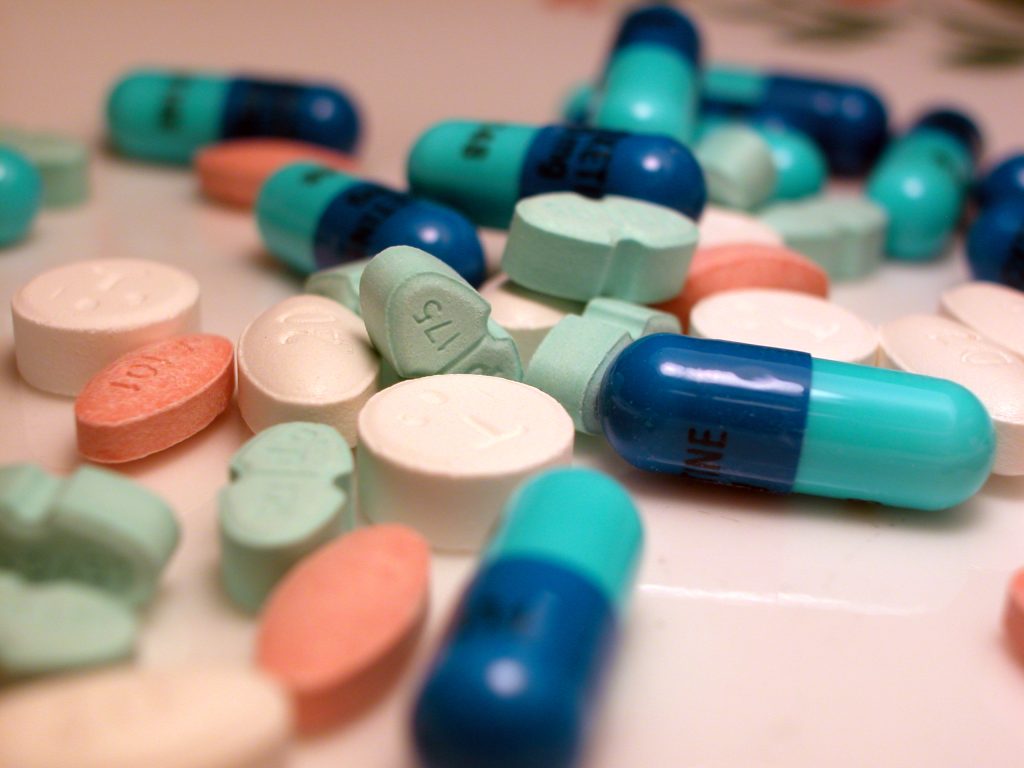
Methylphenidate
Methylphenidate is the base chemical of Ritalin and Concertina.
Methylphenidate:
- Does not prompt your brain to make more Dopamine.
- Acts as a strong Dopamine reuptake inhibitor:
- Decrease the conversion Dopamine in to Noradrenaline, leaving more Dopamine available to your Prefrontal Cortex.
- Increase the sensitivity of Dopamine detection by the Dopamine receptors.
- Thus you need less Dopamine to trigger the ‘on’ switch mode.
- Acting as a ‘virtual increase in Dopamine’, as the same amount of Dopamine ‘goes further’.
- Acts as mild a Noradrenaline reuptake inhibitor:
- Decreases the conversion of Noradrenaline in to Adrenaline, leaving more Noradrenaline available to your Amygdala.
- Which may be an issue if you are in the 10% that have naturally higher levels of Noradrenaline. Talk to your specialist to see if a Beta Blocker is helpful.
- Increase the sensitivity of the Noradrenaline detection by the Noradrenaline receptors.
- Thus you need less Noradrenaline to trigger the ‘on’ switch mode.
- Acting as a mild ‘virtual increase in Noradrenaline’, as the same amount of Noradrenaline ‘goes further’.
- Decreases the conversion of Noradrenaline in to Adrenaline, leaving more Noradrenaline available to your Amygdala.
To quickly understand reuptake inhibitors, a bit of the targeted neurotransmitter is left in the synaptic gap, meaning that less needs to be released from the axon’s vesicles (neurotransmitter storage bladder), which helps the neurotransmitter last longer as you use less. It also slows down the conversion to the next link in the Dopaminergic Chain (Dopamine -> Noradrenaline -> Adrenaline), leaving your neurotransmitter levels less drained.
This is like doing some fancy trick to your car so that the same fuel gets you further.
Amphetamines
The second method is Amphetamines. Amphetamines come in three major forms, two of which are available in Australia. Dextroamphetamine (dexies), Lis-dexamphetamine (Vyvanse) and Methamphetamine (Meth, not available in Australia for ADHD). Some countries outside of Australia have a dex meth combo called Adderall. Each of these do effectively the same thing, but through different paths, so the exact biological effect can vary a bit. For example, Vyvanse makes some people angry, while may not; or the other way around.
Amphetamines will do everything that Methylphenidate does, plus while the medication is active, it prompts your glands to make a bit more Dopamine than they normally would. Technically, there are some really funky things going on in your brain to achieve this, but understanding that is outside the scope of this write up.
Importantly, neither Methylphenidate nor Amphetamines provide Dopamine, Noradrenaline or Adrenaline, or any of the base ingredients to make these.
Non ADHD Dopamine Medications
The following two medications can be helpful for ADHDers struggling with other issues as well.
- Buproprion
- DNRI
- Good for decreasing addiction, especially if you have low Noradrenaline based anxiety.
- In some countries, GPs can prescribe this for mood (not Australia).
- Modafinil
- DNRI
- Good for decreasing addiction, treating sleep disorders.
- GPs are often reluctant to prescribe this and prefer you get this from a psychiatrist. Any psychiatrist can prescribe this, versus the ADHD only medications of methylphenidate or amphetamine (if ADHD is suspected).
Antipsychotics and ADHD
Antipsychotics were named so because they seemed to stop some psychotic experiences. They primary mechanism seems to be blocking a specific kind of Dopamine receptor called D2. We discuss this is greater details in the Dopaminergic System.
- Typical antipsychotics (older), block all 5 types of Dopamine receptor, which exacerbate ADHD.
- Best to avoid if you are an ADHDer
- Atypical antipsychotics (newer), don’t block all of the Dopamine receptors.
- If you need an antipsychotic, talk to your psychiatrist about the best one to take that blocks the least.
- D2 will always be blocked, as it is a part of the definition of the ‘antipsychotic class’ of medication.
If you are admitted to psych ward, they will likely try to give you antipsychotics.
See our page on Psych Ward to see what to do.
Stimulant Myth 1, Stimulants are addictive
Many people consider stimulants to be addictive. In some contexts, this is accurate. There are medical texts that stated that if a person doesn’t need stimulant medication and it is taken at a high dose for a long time, they can become acclimatised to them and reliant on their effects. In my experience, this is mostly false. What is really happening here is that this person is self medicating with the wrong medications. When I have assisted the ‘addict’ to get diagnosed and properly medicated (at 1/100th the street dose or less), they no longer use the illicit high dose street drugs.
Most diagnosed ADHDers are on some kind of stimulant substance to compensate for the Dopamine problem they have. However, many ADHDers often can’t remember if they took their medication and wait for a few errors or a mood drop to confirm that they did not take their medication before taking their forgotten meds. Most ADHDers don’t double dip their medications, because they don’t need to and it feels weird.
Stimulant Myth 2, Isn’t everyone improved by taking stims?
No.
First of all, we know that medicating ADHD helps ADHDers to focus, concentrate and perform better. This performance difference can be detected with very low amounts of medication, eg amphetamine. When non ADHDers were tested with this very low dose, neither they nor the tests they took could tell the difference between the amphetamine medication and a placebo sugar pill.
In this study:
32 participants (who were not ADHD) were administered either amphetamine medication (10mg Adderall) or a placebo.
- The participants were surveyed on whether they thought they received a placebo or the amphetamine and could not tell
- Their answers didn’t align with what they were scheduled).
- The participants were administered a neurocognitive battery each session.
- The cognitive results did not align a gain due to either medication or placebo.
- The dispenser of placebo / amphetamine subtly deceived them (as instructed) about which they got half of the time.
- The cognitive results did align a gain due to belief that they received medication.
Summary Result: Amphetamine did not affect cognitive ability for non-ADHDers.
Why SSRIs Generally Fail for ADHD
In Brief:
- SSRIs can be helpful for some traits (over reactivity) for ADHDers, but are insufficient on their own.
- SSRI can work quickly (day to 2 weeks) if it is the right version.
- SSRI meds are often cited to take 6 weeks to work, which usually informs me it is the wrong medication.
- SSRI medication is a reuptake inhibitor, improving the efficiency of your existing Serotonin.
GP’s will generally try to help your anxiety and depression with a class of medication called SSRI. That stands for Select Serotonin Reuptake Inhibitor. Recall the bit where I talked about how Methylphenidate slowed 1) down the conversion of Dopamine to Noradrenaline and 2) improved its efficiency? That is essentially what “reuptake inhibitor” does (as we described it for Dopamine). An SSRI does this same thing, but slowing down the conversion of Serotonin to Melatonin (when the light you see is dim) or it just being discarded (when it is bright).
No one really knows what the Select means anymore.
SSRIs are a good medication to give to a generally healthy neurotypical person who is going through a bit of life struggles. In about 6 weeks, it can allegedly help boost the Serotonin a bit.
Cynically, coincidentally, the kind of stress that discombobulates healthy neurotypicals, which GP’s are eager to script SSRI medication for, resolves itself in about 6 weeks 9 out of 10 times… so is it the medication that helped?
What is the primary function of Serotonin? Two things.
- Serotonin helps give you a bit of thinking space between a stimuli occurring (like a bang, or someone’s bad behaviour) and you carrying out an action. If you don’t have enough time to think, you do the default. If you have a moment, you can pick a good option (if it exists). This effectively calms you down just a bit.
- A specific Serotonin receptor regulates how much Dopamine etc to make. If it is low, your production is low, if it is high, your production is higher (so long as you have the base materials).
- Low Serotonin DOES NOT cause ADHD, so this is minimally effective.
Here are two SSRI medications that support the Dopaminergic System. There is a Serotonin receptor that regulates the production of Dopamine, so if the SSRI medication positive effects this neuroreceptor, then it can have a positive effect on the ADHDer.
- Sertraline has a second effect where it indirectly acts as a Dopamine agitate, effectively equivalent to increasing how much Dopamine you make (synthesise) in your brain, but through a different pathway than the ADHD medications do.
- That means you can take both Sertraline and primary ADHD medication if you find that running out of Dopamine in the evenings is a problem.
- The first dose may not be enough. The effect to Dopamine is easier to see at around 200 mg, but you may not need that.
- Fluoxetine at 60 mg and higher dose per average adult, will act as a weak NRI and DRI (Noradrenaline Reuptake Inhibitor and Dopamine Reuptake Inhibitor), but are also frequently incompatible for other reasons.
- That is, when it works, its great.
- When it doesn’t, its awful.
SNRI and NRI: Raising Noradrenaline
There is a class of medications called SNRI, which stands for Serotonin Noradrenaline Reuptake Inhibitor. This can help you if you need more Noradrenaline for your Amygdala (about 60% of unmedicated ADHDers).
- Desvenlafaxine (Pristiq):
- The best one of this class is Desvenlafaxine (Pristiq).
- It acts as an indirect weak DRI, which does help ADHDers a bit, often good to use in tandem if your Noradrenaline is still low after taking the ADHD Tier 1 medications.
- Duloxetine (Cymbalta):
- More for neuropathic pain.
- It positively affects the Amygdala at around 90mg for most people.
Clonidine and Guanfacine, decreasing Noradrenaline
Some of my clients have naturally high Noradrenaline, or find that the Tier 1 ADHD medications (Methylphenidate and Amphetamine) boost their average Noradrenaline too high, but they really do need the extra Dopamine support of Tier 1 medications. Two major methods to manage this, Clonidine and Guanfacine. There are a few ways to take these, and that is beyond the scope of this article.
Dopaminergic Diet
We are what we eat… To make a biological chemical, you need to have consumed the basic source ingredients to make that chemical out of. To make the Dopamine family we need:
- Tyrosine amine, from protein.
- Vitamins B6
- Vitamin C
- Ferritin [Iron]
- Oestradiol (estradiol in USA), from LDL Cholesterol.
- More on this in our section on PMDD here.
If you are low in any of these, the meds can’t work.
Also note, concentrated Vitamin C taken at the same time as your amphetamine or methylphenidate medication will interfere with metabolising those medications, so if you need to add Vitamin C to your diet, take it at least 1 hour away from your meds!
More:
- For the full break down of this, see Dopaminergic System, Dopamine Chasing Foods aka The Dopamine Diet.
- For further information on these ingredients, see Dietary Vitamins and Minerals.
References
Cropsey, K. L., Schiavon, S., Hendricks, P. S., Froelich, M., Lentowicz, I., & Fargason, R. (2017). Mixed-amphetamine salts expectancies among college students: Is stimulant induced cognitive enhancement a placebo effect? Drug and Alcohol Dependence, 178, 302–309. https://doi.org/10.1016/j.drugalcdep.2017.05.024